That first time in the driver’s seat can feel bigger than it really is. You may be excited, nervous, unsure where to put your hands, or worried that everyone expects you to know what to do. If you are wondering what happens in your first driving lesson, the reassuring answer is this: you will not be thrown straight into busy traffic. Your instructor will take things at a calm, manageable pace and build from the very beginning.
What happens in your first driving lesson?
Your first lesson is about getting comfortable with the car, understanding the basic controls and taking your first safe steps towards driving independently. What you do will depend on your previous experience and confidence. A complete beginner may spend more time parked up and practising the controls, while someone who has had lessons before may move on more quickly.
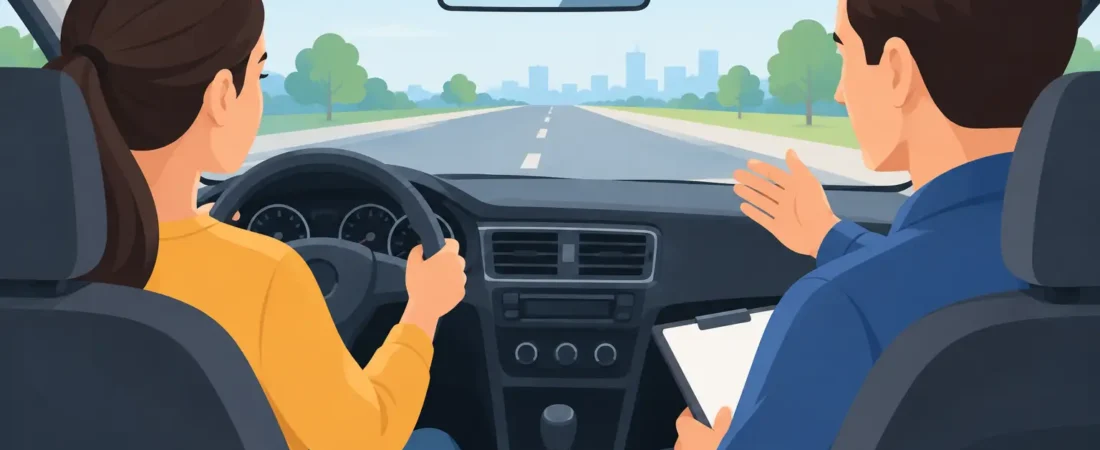
A DVSA-registered instructor will usually meet you at an agreed location in Oxford, such as home, work, university accommodation or another suitable pick-up point. Before setting off, they will check that you hold a valid provisional licence and make sure you feel settled.
There is no pressure to prove yourself. Questions are encouraged, mistakes are expected, and every part of the lesson has a purpose.
First, you will get to know the car
Most first lessons begin with the car stationary in a quiet, suitable place. This gives you time to look around without feeling rushed. Your instructor will help you adjust the seat, steering wheel, head restraint and mirrors so that you can reach the pedals comfortably and have a clear view of the road.
You will be shown the main controls, including the foot pedals, gears, handbrake or electronic parking brake, indicators, windscreen wipers, lights and demisters. In a manual car, you will learn the role of the clutch and the bite point. In an automatic, you will cover the selector positions, brake and accelerator, and how to secure the vehicle before moving away.
This may sound like a lot, but you do not need to memorise every detail at once. Your instructor will explain one thing, let you try it, then repeat it when needed. Learning to drive is a gradual process, not a test of how much you can remember in one hour.
The cockpit drill
You may hear your instructor refer to the cockpit drill. This is a simple routine used before driving: set your seat, adjust the steering wheel and head restraint, then check the mirrors and seatbelt. It helps you create a safe, comfortable driving position every time you get into a car.
Starting with this routine early is useful because it becomes automatic with practice. It is also the sort of safe habit that supports confident driving long after the practical test.
You will learn the basic moving-off routine
Once you are comfortable with the controls, your instructor may guide you through moving off and stopping in a quiet road or car park. They will talk you through each stage clearly, often using prompts at first.
You will learn how to prepare the car, check that it is safe to move, signal if necessary, move away smoothly and pull up safely at the side of the road. In a manual vehicle, this involves coordinating the clutch, accelerator and gears. It is perfectly normal for this to feel unfamiliar initially. Finding the clutch bite is a physical skill, and it improves through repetition rather than overthinking.
In an automatic, you can focus sooner on steering, observations and road position because there is no clutch or gear-changing to manage. Neither option is better for every learner. The right choice depends on your confidence, plans and the type of licence you want.
At MS Drive Academy, lessons are structured around steady progress, so you can focus on one new skill at a time rather than feeling overloaded.
Do you drive on the first lesson?
Many learners do drive during their first lesson, but the distance and type of road will vary. If you are a complete beginner, your instructor may drive you to a quieter area before you take over. This means your first experience behind the wheel can happen away from Oxford’s busiest junctions and roundabouts.
Some learners manage several short moves, stops and turns. Others need longer to get comfortable with the pedals, steering and basic checks. Both are completely fine. A good first lesson is not measured by how far you travel. It is measured by whether you finish with a clearer understanding of the car and greater belief that you can learn.
Your instructor may use dual controls when needed. These allow them to intervene safely if required, which gives you space to practise without carrying the full pressure of every situation alone.
What you will not be expected to do
You are not expected to arrive knowing how to drive. You will not be asked to tackle complex roundabouts, park between two cars or handle fast roads before you are ready. Most learners will not cover manoeuvres, independent driving or mock-test work in their very first session.
You also do not need to get every move-off perfect. Stalling is common in manual lessons and is not a sign that you cannot drive. Your instructor will show you how to recover safely and calmly. The aim is to turn an awkward moment into useful practice, not embarrassment.
If nerves are affecting you, say so at the start. An instructor can adapt the pace, explain things differently, give you more time to practise, or choose an even quieter location. Being honest about how you feel helps create a lesson that works for you.
Manual or automatic for your first lesson?
If you have not yet decided, your first lesson can help you understand the difference. Manual driving involves learning clutch control and gear changes, but a manual licence allows you to drive both manual and automatic cars. Automatic driving removes the clutch and gear changes, which many learners find easier when they want to concentrate on the road.
There is a trade-off. Automatic can feel more straightforward at the start, particularly for nervous learners or those with limited time around work and study. Manual can offer wider vehicle choice once you pass. Your instructor can talk through your goals without pushing you towards an option that does not suit you.
How to prepare for your first lesson
A little preparation can make the experience more comfortable. Bring your provisional licence, wear flat shoes with thin, secure soles, and choose clothing that lets you move easily. Avoid heavy boots, loose flip-flops or anything that makes it hard to feel the pedals.
Try to arrive fed, hydrated and with enough time to breathe. You do not need to study the Highway Code for hours before your first lesson, although a basic awareness of road signs and rules will help as you progress. The most helpful thing you can bring is an open mind.
If you wear glasses or contact lenses for distance vision, bring them. Tell your instructor about any concerns too, whether that is anxiety, previous lessons that did not go well, a learning difference or an upcoming deadline. Clear communication allows your tuition to be shaped around your needs.
What happens after the lesson?
At the end, your instructor will usually talk through what you covered, what went well and what to practise next time. You may be given a simple target, such as remembering the moving-off routine or becoming more consistent with steering.
Your first lesson is also a chance to see whether the teaching style feels right for you. You should leave feeling supported, not judged. You may still have questions, and you may feel tired from concentrating, but you should also have a realistic sense of the road ahead.
Will I be driving on busy Oxford roads straight away?
Usually not. Your instructor will choose an area that matches your experience, then introduce busier roads, junctions and local test-route features as your skills develop. Safe progression matters more than rushing.
How long is a first driving lesson?
This depends on the lesson format you book. Many learners find that a longer first session gives them time to settle in and practise without feeling hurried. Your instructor can help you choose a lesson length that fits your schedule and confidence.
Your first driving lesson is not about being perfect. It is the moment you begin turning independence from an idea into a skill, one calm and well-supported step at a time.